















Fabric Backgrounds for Portrait, Product, and Video Work
Fabric backgrounds give a studio a clean, controllable surface to shoot against, and they fold down small enough to travel with. A muslin, cotton, or canvas backdrop drapes softly, takes light without glare, and rolls up when the shoot wraps. Samy's Camera carries fabric backgrounds from Westcott, Savage, and Gravity Backdrops, alongside the studio and lighting gear that lights them.
A fabric background does two jobs at once. It separates the subject from what sits behind them and gives light somewhere predictable to land. Woven cotton and muslin scatter light across the weave rather than bouncing a specular highlight back at the camera, which keeps a wide drop free of hotspots.
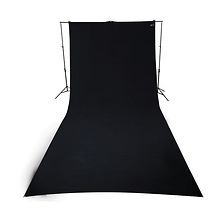
Fabric also travels. A cotton drop folds into a bag and a collapsible frame packs into a tube, which makes on-location headshot sessions practical. Rod pockets slide onto a crossbar and grommets take hooks or clamps, so support comes down to the light stands and grip equipment most studios already own.
Muslin and Cotton Fabric Backdrops
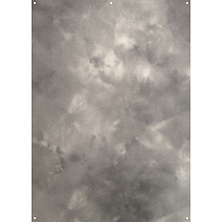
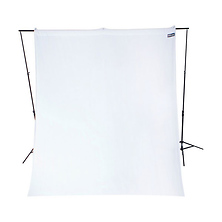
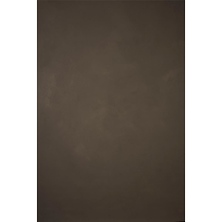
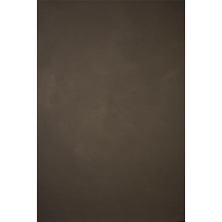
Muslin is the classic studio fabric: 100 percent non-reflective cotton, woven in a single piece so the surface reads seamless apart from the rod pocket. Savage muslin backdrops come in solid colors and in washed, mottled finishes. Westcott wrinkle-resistant cotton backdrops hang from a crossbar or clamp to a support, and the 9 by 20 foot drops reach the floor behind a standing subject.
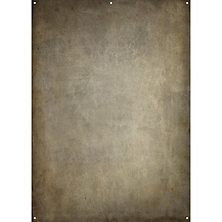
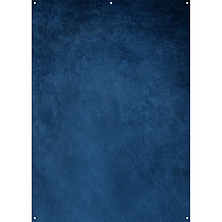
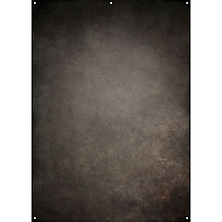
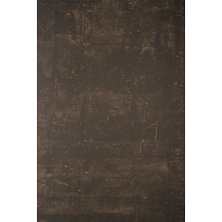
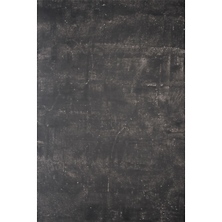
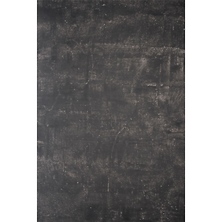
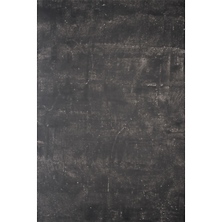
Washed and mottled muslins carry tonal variation across the surface, and lit from the side that texture reads as depth behind the subject. Solid muslins give a flat field of one color, which is what most catalog work calls for.
- 100 percent cotton with a non-reflective weave
- Single-piece construction for a seamless surface
- Sewn rod pocket or metal grommets for hanging
- Machine washable for fast studio turnaround
- Solid colors, washed finishes, and mottled patterns
- Studio sizes including 5 by 7, 8 by 8, and 9 by 20 feet
Hand-Painted Canvas Backdrops
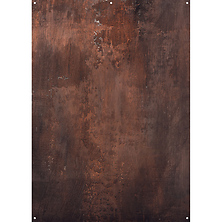
Gravity Backdrops paints on heavyweight duck canvas with professional-grade acrylics, so every piece carries visible brush texture across the surface. The paint sits down in the weave and holds its tone through years of use, and the canvas resists tearing and creasing. Photographers reach for these when the background is part of the picture.
Canvas is a heavier fabric, so plan the support for the weight. A crossbar rated for the drop, or a wall-mounted rail, keeps the top edge straight. Canvas ships rolled in a tube and hangs ready to shoot, which suits studios that swap looks often.
Collapsible and Portable Fabric Backdrops
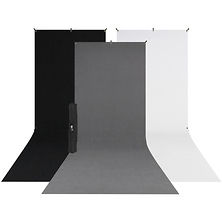
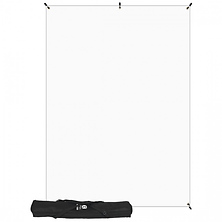
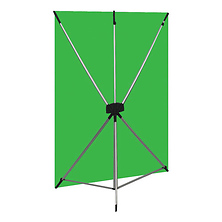
Collapsible fabric backdrops from Westcott pair a tensioned frame with a panel that pulls taut across it. The frame breaks down into a tube, the fabric folds flat, and one person can have a 5 by 7 foot background standing in minutes. Printed panels run high-contrast colors and textured designs on a soft, non-reflective face.
This format suits volume work: school portraits, conference headshot booths, and sessions that move room to room. Paired with portable strobe lighting, the whole kit fits in a car trunk.
Blackout Fabric and Light Control
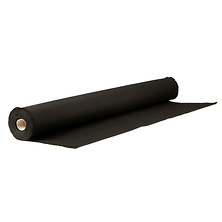
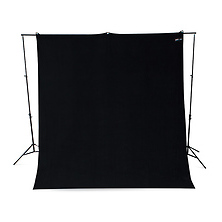
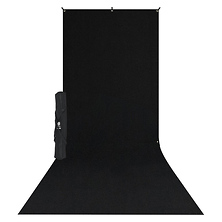
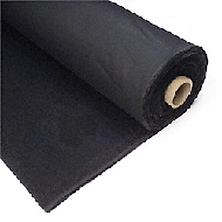
Duvetyne is a heavyweight matte blackout cloth stocked in a 54 inch width, sold in 10 yard lengths. The napped black face absorbs light instead of reflecting it, so it holds as true black on camera even with light spilling nearby. Crews hang it as a background, use it as negative fill, and cut it into flags.
On a set running continuous lighting, blackout cloth is a direct way to control spill. Wrap a stand, tent a product, or hang a length behind the subject and the background falls away with no post work.
Choosing the Right Fabric Background
Start with size, then decide how the drop will hang and how much cleaning it will take. The checklist below covers what our staff asks about most often.
- Shooting distance and subject count set width and drop length
- Rod pockets slide onto a crossbar; grommets take hooks or clamps
- Cotton and muslin arrive folded and relax with a steamer
- Canvas ships in a tube and hangs ready to shoot
- Machine washable fabrics suit high-traffic studios
- Blackout cloth doubles as flag and negative fill material
Who Uses Fabric Backgrounds
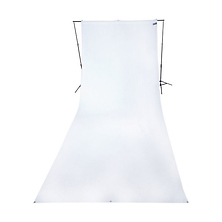
Portrait photographers build most of their studio work on fabric. A white drop lit from behind produces a high-key look, a gray drop takes gels and gradients, and a black drop with a rim light isolates the subject.
Product and commercial shooters use fabric for items too large for a tabletop sweep. A white or gray drop paired with strobe lighting delivers repeatable exposures across a catalog shoot.
Video crews and content creators hang fabric behind interview setups and streaming desks. A textured muslin adds separation without pulling attention. Filmmakers working with video lighting also use blackout cloth to shape what the camera sees at frame edges.
Frequently Asked Questions
How do I get wrinkles out of a fabric backdrop?
Hang the backdrop and let gravity do most of the work overnight. A handheld garment steamer clears the rest, worked from the top down while the fabric hangs under its own weight. Cotton and muslin drops can also go into a warm dryer with a damp towel.
What size fabric background do I need?
For headshots and half-length portraits, a 5 by 7 foot drop is enough. An 8 by 8 foot backdrop covers most seated and half-length work with room around the subject. Full-length subjects and small groups want a 9 by 20 foot drop, which gives width behind the subject and enough length to run onto the floor.
Can fabric backgrounds be washed?
Most of the cotton and muslin backdrops we carry are machine washable, which is one reason they hold up in busy studios. Wash cold, tumble dry low, and hang the drop while slightly damp so it dries smooth. Hand-painted canvas gets spot cleaned with a damp cloth.
How do I hang a fabric backdrop?
Rod pocket backdrops slide onto a crossbar supported by two stands, or onto a wall-mounted rail. Grommeted backdrops hook onto a crossbar, clip to a support with spring clamps, or mount to a collapsible frame.
What is duvetyne used for in photography?
Duvetyne is a heavyweight black cloth with a matte, napped face that absorbs light. Photographers hang it as a black background, use it as negative fill to darken one side of a subject, cut it into flags, and drape it over windows and reflective gear.
Which fabric background color should I start with?
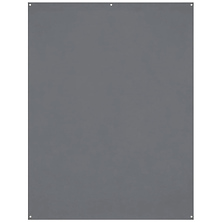
Mid gray is the usual first purchase. It photographs neutral, takes color from gels, and can be lit up toward white or down toward near black depending on how much light reaches it. Our portrait photography buyer's guide covers the lighting behind those looks.
Shop Fabric Backgrounds at Samy's Camera
Samy's Camera has been outfitting photographers since 1976, and our fabric background selection spans muslin, wrinkle-resistant cotton, hand-painted canvas, and blackout cloth, with backdrops from Westcott, Savage, and Gravity Backdrops. Visit one of our store locations to see the fabric in person, or order online.