









Sony Alpha Cameras for Professional Photography and Video
Sony Alpha cameras deliver professional imaging performance through advanced sensor technology, AI-powered autofocus, and video capabilities developed from Sony's broadcast and cinema divisions. The E-mount system serves photographers and videographers across specialties, from sports and wildlife to weddings, events, and content creation. Full-frame and APS-C options provide flexibility for different workflows and budgets, while a comprehensive lens ecosystem supports creative vision at every level.
Key Features of Sony Alpha Cameras
Sony's Alpha lineup centers on Exmor sensors paired with BIONZ XR processors, a combination that enables high-speed continuous shooting, wide dynamic range, and responsive autofocus performance. AI-powered Real-time Recognition AF tracks humans, animals, birds, insects, cars, trains, and aircraft, maintaining focus lock even as subjects move unpredictably through the frame. Phase-detection coverage extends across up to 94% of the sensor area, with sensitivity reaching EV -4.0 or lower in challenging lighting conditions.
Full-Frame Sony Cameras for Professional Work
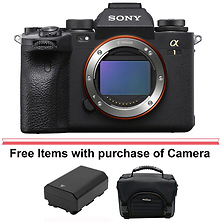
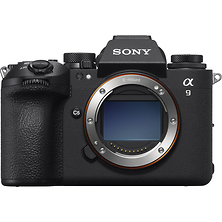
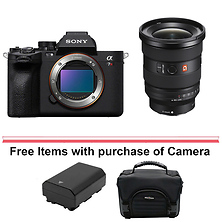
Sony's full-frame Alpha bodies address specific professional requirements. The Alpha 1 II combines a 50.1MP stacked sensor with 30 fps continuous shooting and 8K video recording, serving photographers who demand both resolution and speed. The Alpha 9 III introduces global shutter technology that eliminates rolling shutter distortion entirely, enabling flash sync at any shutter speed up to 1/80,000s and 120 fps continuous capture for action and sports coverage.
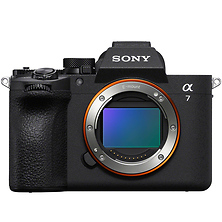
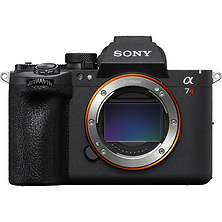
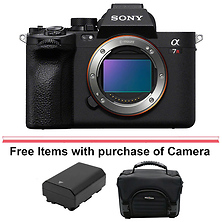
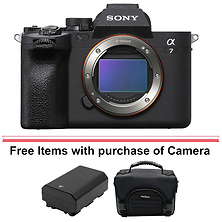
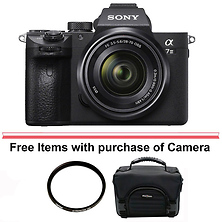
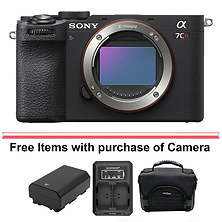
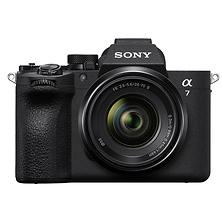
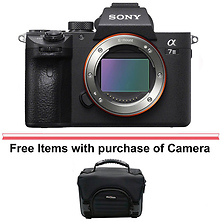
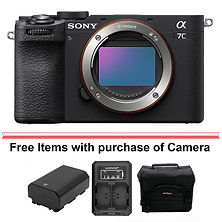
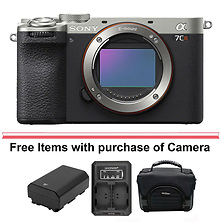
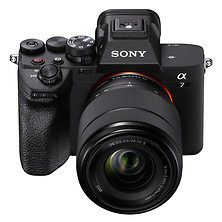
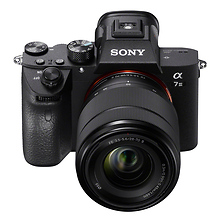
The Alpha 7R V delivers 61MP resolution with 8 stops of in-body stabilization for landscape, studio, and commercial photography where detail takes priority. The Alpha 7 V balances 33MP resolution with a partially stacked sensor for 30 fps burst shooting and responsive autofocus, making it versatile for hybrid shooters who move between stills and video throughout a production day. The Alpha 7C II offers full-frame capability in a compact rangefinder-style body for travel and street photography.
APS-C Sony Cameras for Content Creators
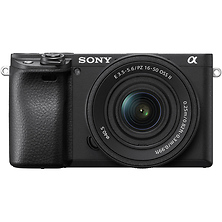
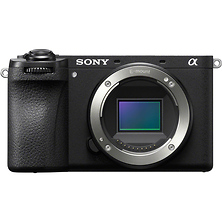
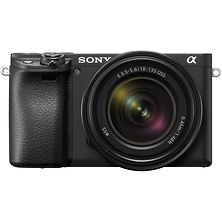
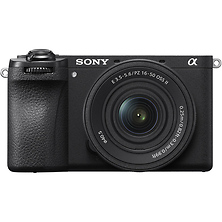
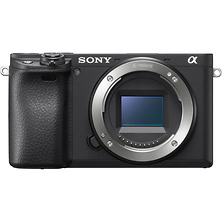
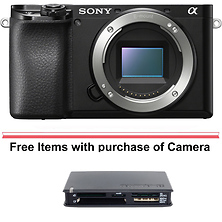
Sony's APS-C cameras provide professional features in smaller, lighter packages. The Alpha 6700 shares its 26MP sensor and BIONZ XR processor with the FX30 cinema camera, recording 4K at up to 120 fps with 10-bit color depth. An AI Processing Unit enhances autofocus tracking, while in-body stabilization rated at 5.0 stops supports handheld shooting in mixed lighting.
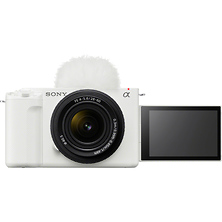
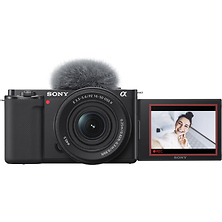
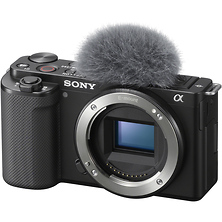
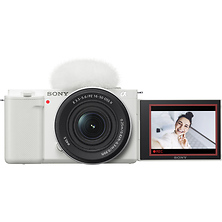
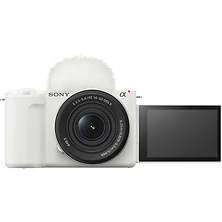
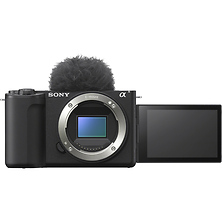
The ZV-E series targets solo creators and vloggers who need professional quality without complex setups. Features like background defocus control, product showcase mode, and built-in directional microphones with wind screens streamline content production. USB-C streaming enables direct broadcast to platforms without additional capture hardware. The interchangeable E-mount lens system provides creative flexibility that fixed-lens cameras cannot match.
Professional Video Capabilities
Sony Alpha cameras draw from Sony's broadcast and cinema expertise. S-Cinetone color science delivers natural skin tones and consistent color reproduction that matches Sony Cinema Line cameras. S-Log3 gamma captures up to 15+ stops of dynamic range for professional color grading workflows. 10-bit 4:2:2 internal recording preserves color information through post-production, while clean HDMI output supports external recorders and monitors.
Focus breathing compensation maintains consistent framing during focus pulls, analyzing lens characteristics and applying real-time digital correction. Active Mode stabilization adds electronic correction to mechanical IBIS for smoother handheld footage when walking or following subjects. Many Alpha bodies support Frame.io Camera-to-Cloud integration for immediate proxy upload and remote collaboration.
E-Mount Lens Ecosystem
The E-mount system provides access to over 70 native lenses from Sony, plus glass from Sigma, Tamron, and other manufacturers. G Master lenses represent Sony's premium tier, combining high resolution with smooth bokeh through XA (extreme aspherical) elements and Nano AR Coating II. The mount's 18mm flange distance enables compact lens designs while also supporting adapted legacy glass from virtually any system.
Full-frame bodies accept both FE (full-frame) and E (APS-C) lenses, automatically cropping when using APS-C glass. This flexibility lets photographers build a kit gradually or use compact APS-C lenses when portability matters more than maximum resolution. Linear response manual focus rings and customizable focus hold buttons give experienced shooters direct control over critical functions.
Who Uses Sony Alpha Cameras
Sports and wildlife photographers rely on the Alpha 1 II and Alpha 9 III for their combination of speed, tracking performance, and buffer depth. The global shutter in the Alpha 9 III eliminates the distortion that can affect fast-moving subjects with traditional sensors, while 120 fps continuous shooting captures peak action.
Wedding and event photographers benefit from Real-time Eye AF that maintains focus on subjects moving through crowded venues. Silent electronic shutter operation allows discreet shooting during ceremonies and speeches. Recent bodies offer strong low-light autofocus that performs reliably in dimly lit reception halls and churches.
Commercial photographers and studio professionals use the Alpha 7R V for its 61MP resolution and pixel-shift multi-shooting mode that produces 240MP images. Tethered shooting support and comprehensive remote control options integrate with professional studio workflows. The 8 stops of in-body stabilization makes handheld product and location shooting practical.
Content creators and hybrid shooters choose Alpha cameras for the combination of professional video specifications and compact body design. 4K recording with 10-bit color, S-Log3 profiles, and focus breathing compensation provide cinema-quality footage. The ability to switch between stills and video without changing gear supports modern content workflows that span platforms and formats.
Frequently Asked Questions
What is the difference between Sony's full-frame and APS-C Alpha cameras?
Full-frame Alpha cameras use 35mm-equivalent sensors that capture more light and provide shallower depth of field at equivalent apertures. APS-C models (6000 series and ZV-E series) use smaller sensors with a 1.5x crop factor, resulting in more compact bodies and lenses. Both formats share the E-mount system and can use the same lenses, though full-frame lenses will be physically larger than APS-C equivalents.
How does Sony's Real-time Tracking AF work?
Real-time Tracking uses AI-powered recognition to identify and follow subjects across the frame. The system analyzes color, pattern, distance, and subject type to predict movement and maintain focus lock. Once you designate a subject by touching the screen or pressing a button, the camera continues tracking even if the subject temporarily moves behind obstacles or turns away from the camera. The AI can recognize and prioritize eyes, faces, and specific body types including humans, animals, birds, insects, and vehicles.
Can Sony Alpha cameras use lenses from other manufacturers?
Yes. The E-mount supports lenses from Sony, Sigma, Tamron. The mount's short flange distance also allows the use of adapted lenses from virtually any system through third-party adapters. Native E-mount lenses provide full autofocus, stabilization, and lens correction features, while adapted lenses may have limited functionality depending on the adapter used.
What video formats do Sony Alpha cameras record?
Current Sony Alpha cameras record in XAVC S (H.264), XAVC HS (H.265), and XAVC S-I (All-Intra) formats. Many mid to high-end models offer 10-bit 4:2:2 internal recording with options for S-Log3, HLG (Hybrid Log-Gamma), and standard picture profiles. Higher-end bodies like the Alpha 1 II and Alpha 7S III add 8K recording capability. All current models output clean video via HDMI for external recording.
Which Sony Alpha camera is best for video production?
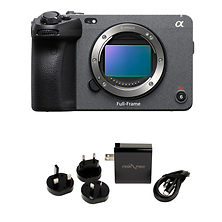
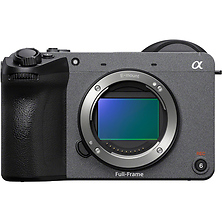
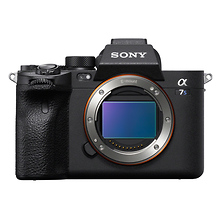
The Alpha 7S III prioritizes video performance with a 12.1MP sensor optimized for low-light sensitivity and reduced rolling shutter. It records 4K at up to 120 fps with full pixel readout. The Alpha 7 V offers balanced hybrid performance with 4K 60p oversampled from 7K and 4K 120p in crop mode. For professional cinema work, the FX3 and FX30 from Sony's Cinema Line share Alpha-series technology in video-optimized body designs.
Do Sony Alpha cameras have weather sealing?
Professional Alpha bodies (Alpha 1 II, Alpha 9 III, Alpha 7R V, Alpha 7 V) feature magnesium alloy construction with dust and moisture sealing around buttons, dials, card slots, and lens mount. These cameras handle typical outdoor shooting conditions reliably. Entry-level and creator-focused models have varying levels of weather resistance. Sony does not publish IP ratings for Alpha cameras, so protection levels are described as "dust and moisture resistant" rather than fully waterproof.
Shop Sony Alpha Cameras at Samy's Camera
Sony Alpha cameras combine sensor innovation, AI-powered autofocus, and professional video capabilities in a system built for serious photographers and creators. Whether you need flagship speed for sports and wildlife, high resolution for commercial work, or hybrid performance for content creation, the Alpha lineup provides tools matched to your workflow. Explore our complete selection of Sony cameras and accessories, or visit a Samy's Camera location for hands-on guidance from our expert staff.