






Video Stabilization Systems for Professional and Creative Filmmakers
Video stabilization equipment eliminates unwanted camera movement, delivering smooth, cinematic footage that keeps audiences engaged. Whether you're shooting documentaries, narrative films, commercials, or social media content, the right stabilizer transforms handheld footage into polished professional work. From compact 3-axis gimbals to full-body Steadicam rigs, video stabilization systems match every camera size and shooting style.
Types of Video Stabilization Equipment
Video stabilizers fall into three main categories: motorized gimbals, mechanical stabilizers, and hybrid systems that combine both technologies. Understanding the differences helps you choose equipment that matches your workflow and production requirements.
Motorized gimbals use electronic sensors and brushless motors to actively counteract unwanted movement across three axes: pan, tilt, and roll. These systems provide consistent stabilization with minimal operator training and work well for run-and-gun shooting where quick setup matters.
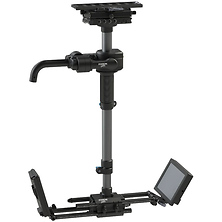
Mechanical stabilizers like Steadicam systems use counterweights, iso-elastic arms, and body-worn vests to isolate the camera from operator movement. These systems require more setup time and operator skill but produce a distinctive organic motion quality that many cinematographers prefer.
Hybrid systems mount motorized gimbals onto Steadicam-style arm and vest combinations, providing the electronic stabilization of gimbals with added vertical (Z-axis) dampening from the mechanical arm.
Key Features of Video Stabilizers
- Payload capacity ratings from 1kg to 30kg+ accommodate smartphones through cinema cameras
- 3-axis motorized stabilization counters pan, tilt, and roll movement
- Battery life ranging from 7 to 18+ hours for extended shooting sessions
- Quick-release plate systems for fast camera mounting and balancing
- Follow focus motor compatibility for remote lens control
- Wireless control and camera connectivity for remote operation
- Multiple operation modes including follow, lock, and POV tracking
- Compact folding designs for transport and storage
- Arm and vest systems for extended shooting without fatigue
- Load distribution through adjustable straps and padding
Gimbals for Different Camera Systems
Smartphone gimbals provide entry-level stabilization for mobile content creators, with payload capacities under 500 grams and compact folding designs. These stabilizers pair with creator apps for automated tracking, time-lapse recording, and motion control effects.
Mirrorless and DSLR gimbals handle payloads from 2kg to 4.5kg, supporting popular camera bodies paired with standard zoom lenses. Brands like DJI and Zhiyun offer models in this category with features including built-in touchscreens, AI subject tracking, and fast-charging batteries.
Cinema gimbals support payloads of 6kg and beyond, accommodating digital cinema cameras with professional cine lenses and accessories. These heavy-duty stabilizers often include expansion ports for external monitors, focus motors, and power distribution.
Steadicam and Mechanical Stabilizers
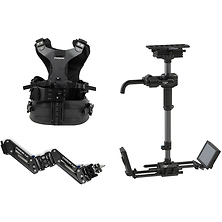
Steadicam systems consist of a body-worn vest, an articulated spring-loaded arm, and a balanced sled that holds the camera and counterweights. The arm absorbs vertical bounce from walking while the gimbal sled maintains level framing. Professional systems support cameras weighing up to 30kg or more.
The mechanical design requires no batteries for the stabilization function, making Steadicam systems reliable for extended shoots. Operators develop skills over time to produce fluid, dynamic camera movements that flow naturally through scenes.
Entry-level stabilizer vests and arms work with smaller cameras, while professional rigs accommodate broadcast camcorders and cinema packages. Many productions pair Steadicam-style arms with motorized gimbals for hybrid stabilization.
Who Uses Video Stabilization Equipment
Documentary filmmakers rely on stabilizers to capture smooth footage while following subjects through unpredictable environments. The ability to move freely while maintaining stable framing suits observational shooting styles.
Wedding and event videographers use gimbals to glide through ceremonies and receptions, capturing coverage that would otherwise require extensive rigging. Compact stabilizers keep setups mobile and unobtrusive during live events.
Narrative filmmakers and commercial producers incorporate Steadicam shots and gimbal work into productions for tracking shots, reveals, and kinetic sequences. Stabilization equipment enables complex camera movements without laying track or building elaborate dolly setups.
Content creators producing for social platforms use smartphone and mirrorless gimbals to achieve production value that stands out in crowded feeds. Lightweight stabilizers make professional-looking footage accessible to solo creators.
Frequently Asked Questions
What is the difference between a gimbal and a Steadicam?
Gimbals use electronic motors and sensors to actively stabilize the camera across three axes. Steadicam systems use mechanical counterbalancing, an articulated arm, and operator skill to isolate the camera from body movement. Gimbals offer quick setup and consistent results, while Steadicam systems produce organic movement and work without batteries.
How much payload capacity do I need?
Calculate your total setup weight including camera body, lens, accessories, and any mounting hardware. Choose a stabilizer rated for at least 20-30% more than your heaviest configuration to ensure optimal performance. Underpowered stabilizers struggle to maintain stability and drain batteries faster.
Can I use a gimbal with professional cinema cameras?
Yes. Cinema-rated gimbals from brands like DJI and Zhiyun support payloads of 6kg to 14kg or more, accommodating cinema cameras with professional lenses and accessories. Some productions mount these gimbals onto arm and vest systems for extended operation.
Do video stabilizers work with any camera?
Most gimbals work with any camera that fits within their payload capacity and mounting plate dimensions. Check compatibility for electronic features like shutter control and follow focus, which require specific camera connections. Mechanical stabilizers accept any camera that can be mounted and balanced on the sled.
How long do gimbal batteries last?
Battery life varies by model and payload. Compact mirrorless gimbals typically run 7-12 hours, while cinema gimbals may operate 10-18 hours or longer. Heavier payloads and continuous motor corrections reduce runtime. Many gimbals support external power sources for extended operation.
Shop Video Stabilization Equipment at Samy's Camera
Video stabilizers turn shaky handheld footage into smooth, engaging sequences that hold viewer attention. From pocket-sized smartphone gimbals to professional Steadicam systems, Samy's Camera carries stabilization equipment for every camera and budget. Fast shipping, expert support, and a full selection of video and audio gear help you build the production kit that matches your creative vision.