









Camera cages transform handheld video work by providing a stable platform that distributes weight evenly while offering countless mounting points for accessories. Whether you're shooting with a hybrid stills and video camera for documentary work or rigging a cinema camera for shoulder-mounted production, a quality cage system gives you repeatable positioning, balanced ergonomics, and room to grow your setup as your needs evolve.
Why Camera Cages Matter for Video Production
A camera cage wraps a rigid aluminum framework around the body, shielding it from knocks on set and giving every accessory a dedicated place to attach. The frame uses industry-standard ARRI locating holes and 1/4-20 threads, so follow focus systems, matte boxes, monitor arms, and cable clamps all mount without adapters or improvised brackets. Microphones and external audio components sit on cage-mounted arms rather than crowding the hot shoe.
The value of a cage shows as the rig grows. The cage is the foundation. Add a side handle and your grip becomes deliberate rather than pinched around the body. Add a top-mounted monitor and focus pulling becomes practical. Add a follow focus with gear reduction and you can hold precise focus through a moving shot. Each component clips onto the frame without competing for the same mounting real estate.
Core Cage Features and Mounting Standards
Professional camera cages share foundational design principles that make them interchangeable with standard accessories. A quality cage incorporates:
- NATO rails along the top and sides for mounting arms, handles, and follow focus rigs
- Integrated cold shoe positions to mount microphones, lights, or small monitors
- ARRI holes (standardized on professional cinema camera equipment) for secure 3/8" threaded attachments
- 1/4-20 threaded inserts distributed across the frame for light mounts, cable clamps, and tripod adapters
- Dovetail slots or Arca-Swiss quick-release plates on the bottom for fast mounting and dismounting from tripods and heads
- Built-in cable management channels or external strap points to route XLR audio cables, power lines, and focus control wires
With these standards in place, a cage bought from SmallRig, Tilta, Kondor Blue, or another manufacturer will accept the same follow focus unit, matte box, and monitor arm. This modularity means your accessories travel with you across multiple cameras and rigs.
Building a Working Video Rig
A practical video setup starts simple and grows as production demands increase. The progression looks like this:
- Bare cage with the camera mounted and balanced: ready for handheld work on lightweight interviews or run-and-gun documentary shoots
- Add a side handle (or two) plus a top handle: spreads the load across both hands and gives you a low grip for waist-level moves
- Mount a monitor on top via an articulated arm: brings focus peaking, false color, and waveform tools to eye level for exposure critical work
- Attach a follow focus system with a control wheel and geared motor: allows pulling focus manually while the camera moves, essential for narrative cinematography
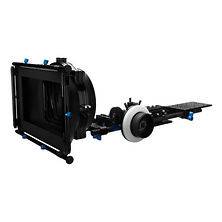
- Add a matte box with filter accessories and a bellows: protects the lens from stray light and gives you a standard platform for ND and specialty filters
- Run cable clamps and grommet organizers: route microphone lines, focus control cables, and power without tangling
Each addition mounts directly to the cage using the standard threaded inserts and rails, so nothing feels bolted on or temporary. The whole rig balances around the lens axis, which means your shoulders stay comfortable for hours of shooting.
Brands in the Camera Support Category
Several manufacturers build support systems for digital mirrorless cameras and cinema cameras, and each takes its own approach to the same standards.
SmallRig builds model-specific cage kits shaped to individual camera bodies, with mounting points positioned around each body's ports and controls. Tilta produces cages and quick-release systems designed around fast assembly and breakdown. Kondor Blue makes machined aluminum cages with color-coded hardware. Bright Tangerine designs cages alongside its own follow focus and matte box lines. Benro, Cam Caddie, and Dana Dolly extend the category with handles, grips, and camera movement systems that mount to the same rigs, and Blackmagic Design supplies accessories built around its own camera bodies.
Handheld and Shoulder-Mounted Configurations
Cages suit two shooting styles. Handheld work benefits from top and side handles with rubber grips, which spread the load across both hands and let your arms work as the shock absorber instead of your wrists. Shoulder-mounted rigs move the weight onto your body, using a longer rail set and a shoulder pad so the camera rests on you while your hands stay free to operate the monitor and follow focus.
A cage ecosystem means your matte box, follow focus, and monitor integrate visually through the aluminum frame. Everything stays perpendicular. Your matte box aligns with the lens axis, and your monitor tilts without loosening the cage. Batteries and power adapters distribute cleanly along the rails with proper cable management.
Frequently Asked Questions
Do I need a cage for handheld work?
For a few short clips a bare body is fine. For a documentary day or a long interview block, a cage changes the ergonomics: handles let both hands carry the weight in a natural position, and the accessories you would otherwise hold get mounted instead. The longer the shoot, the more the difference shows.
What's the difference between a full cage and a half cage?
A full cage surrounds the body on all sides, giving you the most mounting surface and the most protection. A half cage covers the top and one side, which keeps weight and bulk down and leaves the battery door and card slots open. Full cages suit built-out studio and location rigs, half cages suit gimbal work and lightweight travel setups.
Can I mix cage accessories from different brands?
Yes. ARRI holes and 1/4-20 threads are industry standards, so a monitor arm from one brand mounts to a cage from another. Some proprietary modular systems require matching brands, so check compatibility specs before mixing.
How does a cage improve shoulder-mounted stability?
A cage extends the resting surface across your shoulder, distributing weight evenly instead of at a single point. You can add counterweight to the rear, offsetting the front-heavy monitor and lens load. This counterbalance lets you hold the rig steady for longer takes.
Should I use a cage with a tripod?
Yes. Most cages carry dovetail slots or Arca-Swiss compatible plates on the base for standard tripod heads. Add up the weight of the camera, cage, lens, monitor, and batteries, then choose a head and legs whose stated payload comfortably exceeds that total. For gimbal use, check the gimbal's payload rating and confirm the rig still balances on all three axes with the cage fitted.
Shop Camera Support Systems at Samy's Camera
Building a camera rig is an investment in both equipment and workflow. A quality cage from manufacturers like SmallRig, Tilta, or Kondor Blue becomes the foundation for professional video production. Whether you're starting with a basic cage and expanding as your needs grow, or building a full shoulder rig with monitor and follow focus, the cage remains the core that holds everything together. Samy's Camera stocks a wide selection of cages, modular components, and rigging accessories to support any production style.