




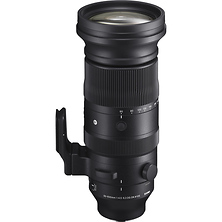
A zoom lens lets you change focal length with a turn of the barrel, so you can go from a wide scene to a tight detail without moving your feet or swapping glass. Our zoom lens selection covers wide-angle, standard, telephoto, and all-in-one ranges for mirrorless and DSLR systems, with options from Sigma, Canon, Sony, Nikon, Tamron, and Fujifilm. Zooms are one part of our wider selection of lenses at Samy's Camera.
How to Choose a Zoom Lens
Every zoom lens is described by two numbers: its focal length range and its maximum aperture. The focal range, such as 24-70mm, tells you how wide and how tight the lens can frame. Shorter numbers take in more of the scene, and longer numbers magnify distant subjects. The maximum aperture, written as an f-number, tells you how much light the lens gathers at its widest opening.
Start with what you shoot most, then match the lens to your camera's mount and sensor format.
Wide-Angle Zoom Lenses
Full-frame wide-angle zooms commonly fall in the 14-24mm, 16-35mm, and 17-40mm classes, while crop-sensor wide zooms start at shorter focal lengths to deliver a similar field of view. These lenses take in sweeping landscapes, tall buildings, and full rooms. If you are weighing a wide zoom against a wide prime, our wide angle lenses collection carries both.
Standard Zoom Lenses
Standard zooms run from a moderate wide angle to a short telephoto, with the 24-70mm class as the familiar choice on full frame. Many photographers keep one mounted most of the time for street scenes, travel, environmental portraits, and events. Constant f/2.8 versions are a favorite of working professionals, while variable-aperture standard zooms stay compact and are often the first lens a photographer owns.
Telephoto Zoom Lenses
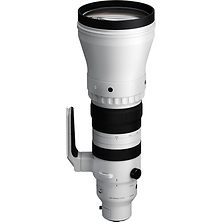
Telephoto zooms bring distant subjects closer. The 70-200mm class is a staple for portraits, weddings, and indoor sports. The 100-400mm class adds reach for field sports and wildlife, and 150-600mm class zooms reach far enough for birds at a distance. Telephoto primes sit alongside these zooms in our telephoto lenses collection.
All-in-One Superzooms
Superzooms span wide angle to telephoto in a single lens, so you can travel with one lens on the camera and skip lens changes. Designs in the 18-300mm class on crop sensors and the 28-200mm class on full frame are popular with travelers and hikers who want to pack light. Their apertures are usually variable, and many include optical stabilization to steady the long end.
Zoom Lens Features That Matter
Image Stabilization
Optical stabilization built into the lens counters small hand movements, which matters most at long focal lengths where every bit of shake is magnified. It lets you handhold at slower shutter speeds, and several camera systems can combine lens stabilization with in-body stabilization for added steadiness.
Mounts and Sensor Formats
Our zoom lens selection includes lenses for Sony E, Canon RF, Canon EF and EF-S, Nikon Z, Nikon F, Fujifilm X, Fujifilm GF, L-Mount, Micro Four Thirds, and Hasselblad XCD cameras. Canon, Nikon, Sony, and Fujifilm design zooms for their own systems. OM System and Panasonic build zooms for Micro Four Thirds, and Hasselblad makes zooms for its XCD medium format bodies.
Zoom Lenses from Sigma, Tamron, and Samyang
Independent lens makers design zooms for several mounts. Sigma's zooms run from standard ranges to long telephotos designed for sports and wildlife. Our Sigma zoom lenses page explains how Sigma organizes its zoom lineup and what its lens name letters mean, such as DG for full frame and DC for crop sensors. Tamron and Samyang also build zooms for popular mirrorless mounts.
Who Uses Zoom Lenses
Beginners often start with a standard zoom or a superzoom while they learn which focal lengths they reach for most. Wedding and event photographers rely on 24-70mm and 70-200mm class zooms to move from group shots to candid moments without changing lenses. Wildlife and sports photographers follow action at a distance with long telephoto zooms. Landscape and real estate photographers depend on wide zooms, and videographers often choose constant-aperture zooms so exposure holds steady when they zoom during a shot.
Frequently Asked Questions
What is the difference between a zoom lens and a prime lens?
A prime lens has one fixed focal length, while a zoom lens covers a range. A zoom gives you framing flexibility from a single position and reduces how often you change lenses.
Is a digital zoom the same as a zoom lens?
No. A zoom lens changes focal length optically by moving glass elements inside the barrel, so the camera records full sensor resolution at every focal length. Digital zoom crops into the center of the image and enlarges it, so fewer original pixels make up the final picture.
How does crop factor affect a zoom lens?
A smaller sensor captures a narrower slice of the image a lens projects. On an APS-C body with a 1.5x crop factor, a 70-200mm class zoom frames like roughly 105-300mm on a full-frame body. Canon APS-C bodies use 1.6x and Micro Four Thirds uses 2x, so a 100-400mm class zoom on Micro Four Thirds frames like 200-800mm. The focal length itself stays the same; only the field of view changes.
Do I need a constant-aperture zoom?
A constant-aperture zoom keeps the same maximum f-stop through its whole range, while a variable-aperture zoom, labeled with two numbers such as f/4-5.6, narrows its maximum aperture toward the long end. If you work indoors, at receptions, or on video where you zoom during a take, a constant f/2.8 or f/4 zoom keeps exposure predictable. For daylight travel and landscapes, a variable-aperture zoom is a compact, lightweight way to cover the range.
Can I use a DSLR zoom lens on a mirrorless camera?
In many cases, yes. Canon EF and EF-S lenses work on Canon RF bodies through Canon's EF to RF mount adapters, and Nikon F lenses work on Nikon Z bodies through Nikon's F to Z mount adapter. Autofocus behavior depends on the specific lens and body pairing.
How should I care for a zoom lens?
Keep the caps on when the lens is off the camera, and use a lens hood to guard the front element from bumps and stray light. Clean the glass with a blower and a microfiber cloth, and keep cleaning supplies in your camera bag. Some telephoto zooms include a zoom lock that holds the barrel at its shortest setting while you carry the camera.
Shop Zoom Lenses at Samy's Camera
Since 1976, Samy's Camera has helped photographers and filmmakers find the right glass for the way they work. Our team can help you sort through focal ranges, apertures, and mount compatibility. Order online for fast shipping, or call us at 800-321-4726 to talk through your options.