









Clear audio carries a video as much as the picture does. Our Microphones & Accessories department brings together microphones for every kind of recording, from camera-mount shotgun mics and clip-on lavaliers to compact wireless mic systems and podcast microphones, plus the boom poles, windscreens, mixers, and cables that support them. We have helped photographers and filmmakers choose gear since 1976.
Microphones & Accessories for Video, Podcasts, and Streaming
Choosing a microphone starts with two questions: how far will the mic sit from the speaker, and will that person move? The closer a microphone is to its source, the more voice it captures relative to room echo and background noise. Each type below handles that distance in its own way.
Shotgun Mics for Directional Sound
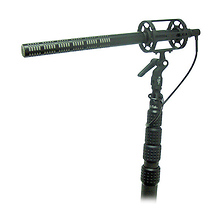
Shotgun mics use a long interference tube to narrow their pickup, so they favor sound from the direction they point and pick up less from the sides. Compact camera-mount models from Rode, Sony, Sennheiser, Deity, Saramonic, and Audio-Technica slide into a camera's shoe for directional sound that follows the lens, and Sony, Canon, Nikon, and Panasonic make directional mics designed for their own cameras. On a boom pole, a full-size shotgun can sit just outside the frame, much closer to the speaker.
Lavalier and Lapel Mics
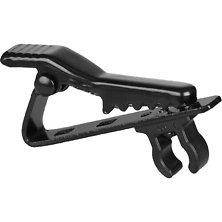
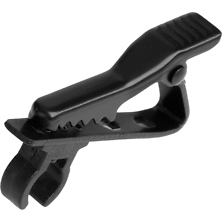
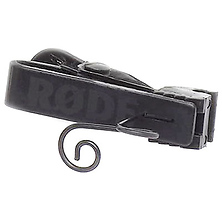
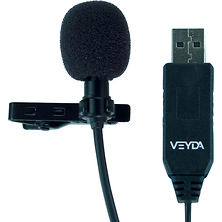
A lavalier clips to clothing at mid-chest, which keeps the mic at a consistent distance from the speaker's mouth as they move. Most use an omnidirectional pickup, so the voice stays clear when the speaker turns their head. Our lavalier and lapel mics include wired options from Rode, Sennheiser, Sony, Saramonic, Audio-Technica, and Mackie, plus lavaliers made for wireless systems from DJI, Hollyland, and Rode.
Wireless Mic Systems
A wireless mic system pairs a transmitter worn by the speaker with a receiver on the camera, phone, or recorder. Our wireless audio systems follow two main approaches:
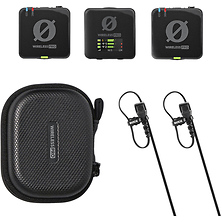
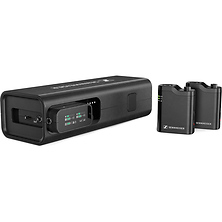
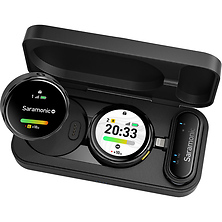
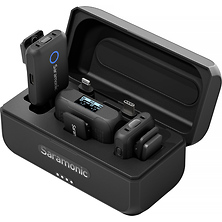
- Compact digital systems from DJI, Rode, Hollyland, Saramonic, Sennheiser, Insta360, SmallRig, and Mackie use the license-free 2.4 GHz band shared with Wi-Fi and Bluetooth, and many clip-on transmitters have a built-in mic.
- UHF systems from Sennheiser, Sony, Saramonic, and Deity work within the frequency range listed for each kit and let you select a channel, which helps when several systems share a set.
Several compact kits from DJI, Rode, and Sennheiser also record inside the transmitter as a backup, and some record 32-bit float files that leave room to recover clipped or quiet audio. This section also carries wireless intercom headsets from Hollyland and Saramonic, video transmitters from Accsoon, Hollyland, Teradek, and DJI, and wireless timecode generators from Deity.
Mini Microphones for Phones and Compact Cameras
A mini microphone keeps your rig light. Ultracompact wireless kits from DJI, Rode, Hollyland, and Saramonic offer receivers that plug straight into a phone's USB-C port, compact directional mics from Rode and Sennheiser fit small cameras and phone rigs, and USB-C lapel mics from Sennheiser connect directly to a phone or laptop.
Podcast, Broadcast, and USB Microphones
For podcasts, streaming, and voiceover, we carry dynamic broadcast microphones from Shure, Rode, Mackie, Zoom, and Saramonic. Most are designed for close use with cardioid-type patterns that focus on the voice in front of the mic and pick up less from the sides and rear, which helps in untreated rooms. USB microphones from Rode, Mackie, and Cam Caddie plug straight into a computer, and some Shure podcast mics offer both USB and XLR outputs.
Microphone Accessories That Complete the Setup
The right microphone accessories keep a mic steady, quiet, and connected:
- Windscreens from Rode, Rycote, K-Tek, and Sennheiser, from foam covers for indoor use to furry windshields that slow moving air outdoors
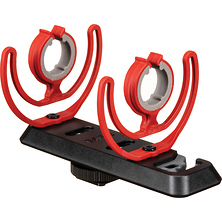
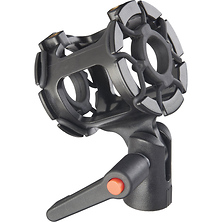
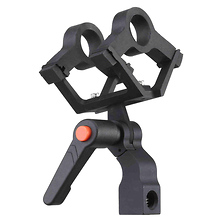
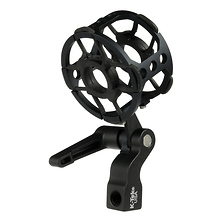
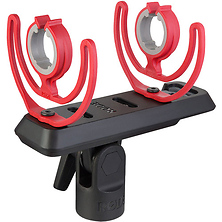
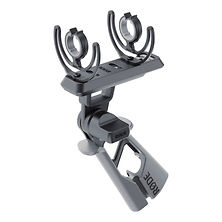
- Shock mounts from K-Tek and Rode that isolate the mic from handling noise and vibration
- Microphone boom poles from K-Tek, including cabled versions with an XLR cable running inside the pole
- Desktop boom arms and mic stands from Rode, Gator, and Phottix
- Camera XLR adapters from Sony, Panasonic, and Tascam that add XLR inputs to compatible camera bodies
Mixers, Consoles, and Audio Cables
When a production grows past one mic, our pro audio mixers handle the next step. Podcast production consoles from Rode and Mackie combine at least two microphone inputs, headphone outputs, and a USB connection to a computer in one desktop unit, and Saramonic offers a compact passive mixer that blends two 3.5mm sources into one camera input without batteries. Cables from Calrad, PSC, Audio-Technica, Rode, and Deity connect everything in between.
Who Uses Microphones & Accessories
Filmmakers and documentary crews pair boom-mounted shotgun mics with wireless lavaliers, adding timecode and intercoms to keep the set in sync. Content creators and vloggers build around camera-mount mics and mini wireless kits for interviews and street segments. Wedding and event videographers use clip-on wireless mics with internal backup recording for vows and speeches that happen once. Podcasters, streamers, educators, and corporate teams build desk setups around broadcast mics, boom arms, and production consoles, with handheld wireless mics from Sennheiser and Hollyland for presentations.
Frequently Asked Questions
What type of microphone should I use for video?
Match the mic to the distance and movement in your shot. A wireless lavalier keeps audio consistent for a speaker who moves around. A camera-mount shotgun mic is the simplest setup for run-and-gun shooting. For interviews and scripted scenes, a shotgun on a boom pole just outside the frame captures natural dialogue.
Do I need phantom power for my microphone?
Condenser microphones need power, supplied as 48V phantom power over XLR, by an internal battery, as plug-in power from a camera or transmitter, or through USB on USB models. Passive dynamic microphones generate their signal without external power, though a dynamic model with a built-in preamp draws phantom power for that preamp. For an input without phantom power, a battery-powered 48V phantom supply from PSC can power the mic on its own.
Can I use a wireless mic with my smartphone?
Yes. Many compact wireless kits include a receiver that plugs straight into a phone's USB-C port. If you connect through a 3.5mm cable instead, smartphone headset jacks use a four-contact TRRS connection while camera mic inputs use three-contact TRS, so the cable has to match the device. Our audio cables include TRS to TRRS adapters.
Should I choose a USB or XLR microphone for podcasting?
A USB microphone is the most direct route for a solo show, since it connects straight to a computer. An XLR microphone connects to an audio interface, mixer, or production console, which lets you run several mics at once and control each voice separately. Hybrid podcast mics with both outputs let you start on USB and move to XLR as your show grows.
Shop Microphones & Accessories at Samy's Camera
We're glad to talk through mic choice and wireless setups at any of our stores or by phone at 800-321-4726. When you're ready to build out the rest of your rig, explore our full video and audio department.