



C-Stands and Accessories for Studio and Location Work
A C-stand is the piece of grip equipment that holds everything you are not holding yourself. Lights, flags, silks, bounce cards, reflectors, and overhead rigs all end up on one, and the reason C-stands have been the studio standard for decades is that a properly weighted stand stays exactly where you set it. Samy's Camera stocks Matthews and Avenger C-stands and the light stands and grip equipment that goes with them.
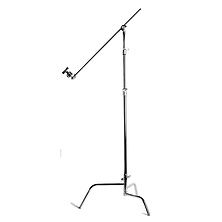
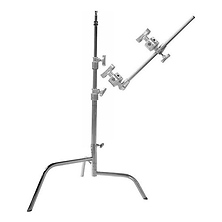
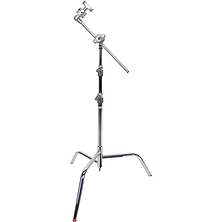
The name is short for century stand, and the design has barely changed because it did not need to. Three legs of graduated height fold flat and nest, so the stand can be placed with one leg under a table or against a wall while the other two carry the load. Two or three riser sections telescope up from the base column, and a grip head at the top accepts an arm that puts your load out over the set instead of directly above the stand.
That offset is the whole point. A boom arm lets a light sit above a subject with no stand leg in the frame, and it lets a flag sit inches from a lens without a stand in the shot. The tradeoff is leverage, which is why C-stands are built heavy and why sandbags belong on the high leg any time an arm is extended.
Grip Heads
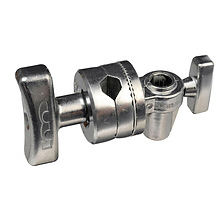
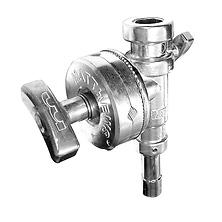
The grip head is the joint that makes the system work. A cast body with two knurled discs clamps onto both the stand column and a grip arm, and tightening a single knob locks rotation on two axes at once. Matthews grip heads are the industry reference here, and they come in sizes matched to the load. Larger heads hold heavier arms and heavier fixtures without creeping under weight over a long setup.
Head sizing follows the work. A smaller head handles flags, small reflectors, and compact fixtures. A larger head is what you want when a heavy modifier or a full size light hangs off the end of an extended arm.
Grip Arms
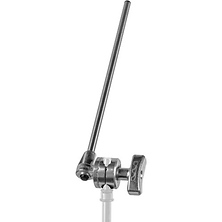
Grip arms extend the reach of a stand and give you a second mounting point away from the column. Avenger and Matthews arms come in standard lengths, and the choice comes down to how far you need to reach and how much weight travels out there with it. Common uses on set include:
- Booming a light over a subject with no stand visible in frame
- Positioning a flag to cut spill off a background
- Holding a silk or diffusion panel between a light source and the subject
- Suspending a bounce card to fill shadow from underneath
- Rigging a small monitor or accessory clear of the camera
Kits and Complete Setups
Stand, head, and arm are sold as kits for a reason. Buying them together guarantees the head fits the column and the arm fits the head, and it is how most studios build out. Turtle base kits fold flat for transport, which matters when the stands travel between a studio and a location.
A practical studio floor runs at least four C-stands. Two carry key and fill, one holds a flag or a negative fill card, and one stays free for whatever the shot turns out to need. Photographers building a lighting package around monolight strobe heads and kits should plan stand count alongside head count rather than after.
Who Uses C-Stands
Portrait and commercial photographers use them for everything past the key light. Modifiers, flags, and bounce all need a stable mount, and a light stand alone will not hold a modifier out over a subject.
Video and film crews live on them. Shaping light with flags and nets, rigging diffusion, and holding practicals in place are daily grip tasks, and continuous lighting fixtures spend most of their time on a C-stand rather than a light stand. Crews working across video lighting setups generally own more stands than fixtures.
Product and tabletop photographers use shorter stands and smaller arms to bring cards and diffusion in close without crowding the camera. Educational studios and rental houses buy C-stands because they survive constant handling by people who did not buy them.
Frequently Asked Questions
What is the difference between a C-stand and a light stand?
A light stand carries a fixture straight up on its column and is built light for portability. A C-stand is heavier, uses a grip head and arm to place the load off to one side, and holds position under lateral load. Use a light stand to raise a light and a C-stand to place anything that has to sit out over the set.
Which leg does the sandbag go on?
The high leg, meaning the tallest of the three legs, and it should be the leg positioned under the extended arm. Bagging the high leg puts counterweight directly opposite the load. Sandbagging a low leg on the wrong side does very little.
Which way should the arm turn to tighten?
Set the arm so the weight rotates the head in the direction that tightens the knob. If the load ever slips, gravity then pulls the joint tighter instead of loosening it. This is the single most useful habit to build with grip gear.
What size C-stand should I buy?
A 40 inch base with two risers is the standard studio height and covers most work. A 20 inch base is easier to transport and works well for tabletop, product, and tight interiors. If you shoot in rooms with normal ceilings, the taller stand still gives you headroom to spare.
Do C-stands work outdoors?
Yes, with weight on them. Wind is the concern rather than the stand itself, and any silk or flag becomes a sail. Bag every leg, keep risers lower than you would indoors, and take panels down between setups.
Can a C-stand hold a camera?
A grip head and arm can carry a small camera or accessory, and crews do rig monitors and compact bodies this way. For the camera itself in a normal shooting position, a proper support from our tripods and heads selection is the right tool.
Shop C-Stands and Accessories at Samy's Camera
Samy's Camera has supplied working studios and crews since 1976. Browse Matthews and Avenger C-stands, grip heads, arms, and kits online, or come see them in person at one of our store locations and get a feel for the weight before you buy.